Friday, 29 September 2017

Face the music

As someone who's obsessed with both music and portrait photography, I doubt I'll surprise anyone when I say that I've always been fascinated with album cover art - especially when there is some clear intent behind how the musicians (if they appear) are represented.

Of course, some record labels have a very particular aesthetic that seems to elevate them - rightly or wrongly - above their roster of individual artists. Those of you sharing my vintage may well recall Manchester's Factory, which favoured the austere, industrial sleeve design of Peter Savile over band photos. Perhaps the most successful and fitting use of this kind of approach is ECM, where the clean, sparse, yet atmospheric and often abstract sleeves encapsulate the meticulous production values of the recorded sound. The label almost steps back, self-effacing, an anti-identity in complete service of the musicians.

But much as I admire this kind of approach, it can't win my love in the way that, say, Blue Note's unforgettable album covers can: Francis Wolff's majestic photography, married to bold typography that gives the sleeve a level of design class that a Saul Bass opening sequence would lend a film.


Or - looking through a different lens - the extraordinary sleeves Morrissey collated for The Smiths: together, a kind of second-hand, self-defining portrait archive drawn from movie stills and publicity shots that located the band's records in a very specific universe.


However, talking of very specific universes: on discovering and exploring classical music, I was if anything even more intrigued by the way a lot of the records - admittedly, more often than not shrunk to CD size nowadays - actually looked. To reel off the clichés: overwhelming quantities of decorous paintings, drawings of the relevant composers with forbiddingly serious countenance, and elder-statesmanlike portraits of conductors - presented with a kind of solid, furrowed intensity that could convince you Karajan had been carved out of Mount Rushmore.

It struck me that the visual presentation of classical recordings must have always presented a peculiar set of challenges. To begin with, there's the scholarly 'catalogue' aspect (no doubt feeding into the music's ongoing, regrettable dry/academic/elite image) of including all the necessary information in the title: composer, piece, conductor, soloists, orchestra, etc. Fine art must have been a very welcome option, not just in keeping with 'tradition'/'history', but also sidestepping any decision about exactly how many people to try and get onto the cover.

(The marvellous Hyperion record label has a house style of sorts - line up their CDs on your shelf and you'll see that the spine typeface is almost always the same - but it seems caught between these old and new styles of presentation: compare these art song titles, and you'll see quite a difference between the 'old school' Strauss and Hahn covers and the striking portraits of the Liszt and Brahms series.)


How do you get past the fact of so many releases called more or less exactly the same thing? - how many thousands of 'Beethoven: 5th Symphony's must there be? It's perhaps no wonder that the conductor in particular often becomes the 'brand' of a recording, and their noble visages still grace their latest projects: think of how Riccardo Chailly appears on the Gewundhausorchester Brahms and Beethoven cycles, or the current Elgar sequence from Staatskapelle Berlin under Daniel Barenboim, where the maestro appears almost preserved in an Old Master-ish sepia.

Entire books have been written and assembled about album sleeve design, and rightly so. All I have here is a blog post, but I mainly want to flag a few recent examples I've noticed in the classical genre where some of the conformities and constraints seem to have been more relaxed. I hope this becomes at least a tendency, even better a trend. Listeners like me who come to classical after rock, jazz, folk and so on are so often 'artist-led' and used to 'albums', rather than 'works'.

Sometimes it's as simple as owning something by naming it. I'm interested in how Rachel Barton Pine gives her records an extra title that 'overlays' the contents - and instantly announces the releases as albums - more personal projects, somehow, than 'mere' recordings. The DG label seems to be trying the same thing with the Liszt release from Daniil Trifonov. And the Andris Nelsons Shostakovich discs - which clearly nod to the 'austere conductor portrait' tradition - acquire an extra brand boost with the overarching title 'Under Stalin's Shadow' - something that will bind this series of CDs together to tell some kind of story alongside the music.


I find it very satisfying when the visual art seems to communicate something very specific about the performers. Florian Boesch and Malcolm Martineau are an ideal lieder team: in Schubert's songs where the voice and piano are so often equal partners, FB's willingness to almost 'step back' and allow his baritone to melt into MM's characterful playing makes for a near-perfect balance between them. So I wonder if it's coincidence that the art for their Schubert song-cycles on Onyx gives both men equal weight: two halves of the same enterprise. (I'd also love to know what prompted the 'slight' change of tack for the fourth CD of stand-alone lieder - certainly eye-catching! - although the fact that these are 'unconnected' songs in a variety of moods is well conveyed by the miniature repeats of the 'faces' motif in a range of colours.)


Some of my favourite singers and musicians are building bodies of work featuring intriguing and adventurous approaches to performance and programming - and the photography and design surrounding their music only underlines this. I don't see it as incidental that singers so often 'present' in this way - as, much like in the rock world, they are essentially in the 'frontman/woman' role.

Carolyn Sampson's recital albums with Joseph Middleton for BIS are strongly thematic (flowers, followed by the poetry of Verlaine) and the CD covers feature striking images of CS in line with the concept (surrounded by blooms, then beneath a shimmering 'clair de lune'). The forthcoming album of mad songs promises to have her appearing as the ill-fated Ophelia on the sleeve. But for their current release, where the duo team up with Iestyn Davies, the photo on the cover is a brilliantly bold, almost stark, double portrait: not only is it a great shot, but could you better capture the way the music on the CD itself marries 'old' and 'new' material and interpretations? ID exudes similar levels of cool on the sleeve of a recent Hyperion Bach disc, the font on the front of the sheet music echoing the record label's own distinctive logo, but both delightfully out of time with the rest of the composition.


This final selection, to me, seem to attain a kind of extremity of design - perhaps no surprise, given that they mostly belong to the work of Barbara Hannigan, renowned for her powerful and highly physical performances, and - I think it's clear - someone very much in control of curating her image. From the icy pallor of the 'let me tell you' song sequence (more Ophelia), through the candid nonchalance of the Satie recording with Reinbert de Leeuw - possibly the least diva-like cover shot you could imagine - right up to the stylish abandon adorning her new album: these all have the distinction of being shots it's impossible to imagine featuring anyone else. Likewise, my closing choice, the most recent CD from Anna Prohaska - another inventive recital programmer, here collecting 'Arias for Dido and Cleopatra' - explaining the astonishing cover portrait's arresting combination of tattoo and terror in the eyes.

I could have chosen so many more, but I think time and space (which just about covers everything) are against me. Maybe a follow-up post will conjure itself up in the future.


Friday, 15 September 2017

Snap decisions: Specs on holiday

My job has been fairly intense in recent months, and given the old work/life balance a bit of a knock. So it was fantastic to finally get away to our 'regular' retreat in Northumberland - although this visit would be the first in three years. It was wonderful to relax, have the time and space to think and breathe... and write, without all the technical copy I have to come up with during the working day crowding my brain. My recent Proms posts were drafted in the idyllic setting of the holiday cottage.

Regular readers - or perhaps, in this case, viewers - will know about my photography hobby, and the portrait work I do with a group of friends very much represents me at my 'artsiest'. The camera always comes with me on holiday, but I'm aware that my pictures of Northumberland must run into several hundreds, with many near-duplicates and recurring subjects.

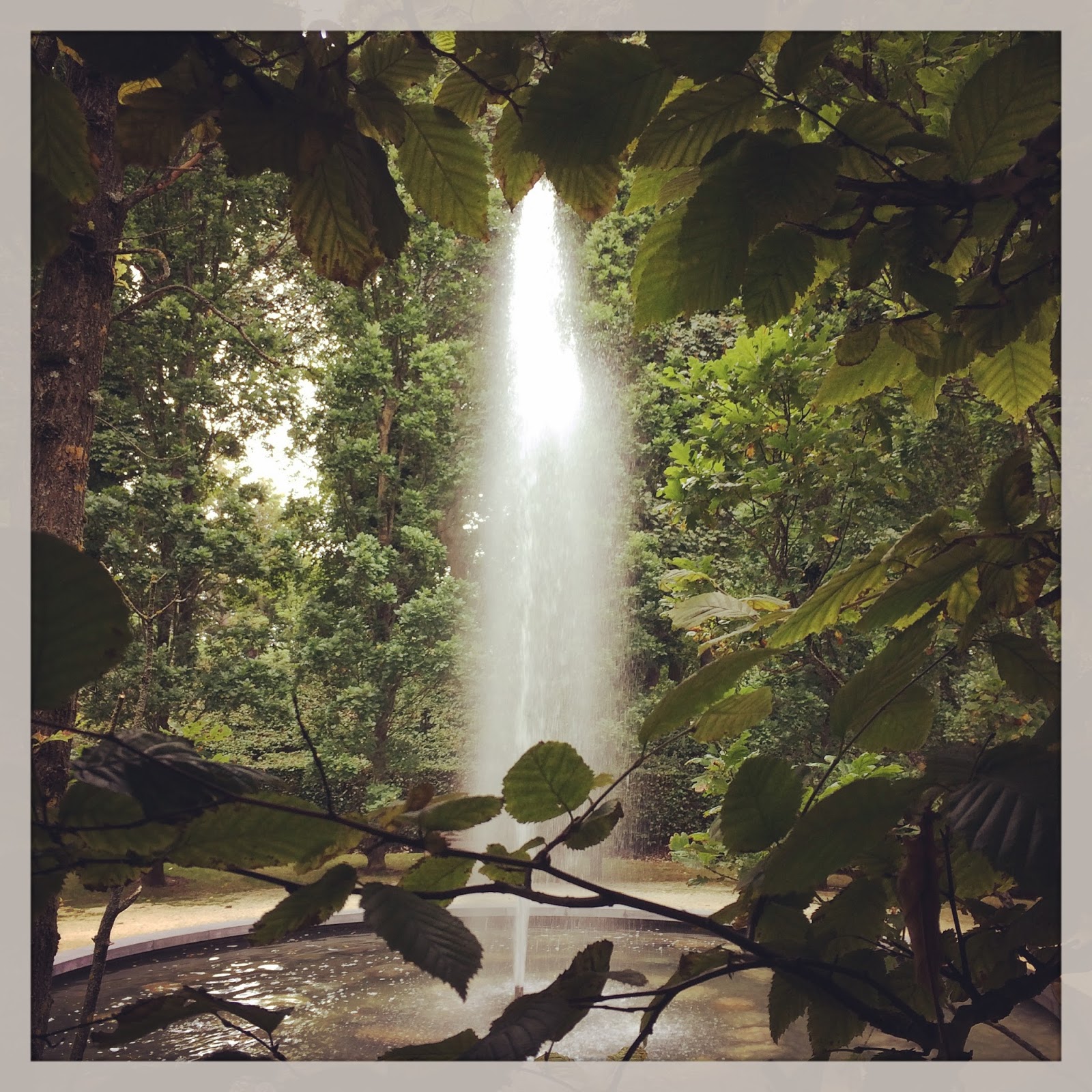
So - it's hard to explain, but this time, almost subconsciously, I largely just larked about. My mental energy was so sapped, I didn't want to 'worry' about every photo. I rediscovered the ubiquitous Instagram, which I hadn't used properly for years. I'd forgotten how the instant edit functions - a border here, some drama or trickery there - made taking snapshots just fun: nothing more, nothing less. That said, even though you're no longer quite so restricted within the app, I really enjoyed sticking, come what may, to the square ratio. It's impossible for the music nerd in me to separate that format from the traditional album cover... which added a whole new dimension to how I composed a few of the shots.

So, this isn't a showcase for my photography by any means - certainly not in the way I proudly share some of the portraiture - but it is a bit of a shout-out to Northumberland, one of my very favourite parts of the world. If you're in the mood to have a look through my holiday snaps, press on - I hope you enjoy them.

*

The Angel of the North welcomes us - and everyone else - back with open arms.


The view from our cottage.


The Cragside estate is a real refuge for us - we always seem to end up going more than once on every trip. A cameo appearance from Mrs Specs here!


Dunstanburgh Castle.


The Alnwick Garden.


A sequence of photos taken at Wallington - like Cragside, another National Trust house and estate. I was extremely pleased to see whose music took pride of place at the piano. The house itself is a den of eccentricity: a library of some 3,000 books in a single room, Escher-like staircases and a blood-freezing collection of dolls' houses. (My in-laws came down from Scotland to meet us for a few days, and it's them, along with Mrs Specs, traipsing the woodland path.)


The second-hand book shops in Northumberland are of the very highest quality.


An excursion to Kielder Water, now home to some unusual art installations - in particular this secluded 'Minotaur Maze'. I should point out that Mrs Specs isn't still there.


A day trip to Newcastle-upon-Tyne, returning via Tynemouth - where (to continue the spookiness theme) we discovered the most terrifying Toy Museum on the planet. So scary, it's now called only the 'To Useum'.


There is more than one second-hand book shop in Northumberland.


Return to Cragside for a PROPER walk this time - one of those slightly mystical country treks where there is definitely more uphill than downhill. 'Invigorating'.


Where we stay. It's all farmland, with the croft and cottages at the top. The overall property is also home to a ruined castle and disused viaduct.


(Shudder.)


It's become a running joke that anywhere we have a meal out in this neck of the woods is completely deserted. This was a homely place with a slight buzz when we arrived. Looking about us after demolishing our starters, we saw this:


It is us. It's definitely us.

Sunday, 3 September 2017

Piece to camera: classical music on TV

As I type, the 2017 Proms have just under a week left to run. But one feature of the season has already come to an end: the BBC show ‘Proms Extra’, which broadcasts each Saturday evening throughout the festival, apart from on the ‘Last Night’ itself.

Yesterday evening, then, was its final episode for this year. Hosted by Prombassador-in-chief Katie Derham, the programme aims to round up highlights from the previous week’s concerts and trail the treats still to come. There’s a routine: three guest musicians occupy the couch each week and, under KD’s conversational baton, add their thoughts and reflections. One of them gamely performs at the end to play or sing the show out. Some vox pops from the Prommers often feature, and David Owen Norris (a renowned UK composer-performer, here in genial boffin mode) has a ‘Chord of the Week’ spot where he explains a particular motif or technique used by one of the composers featured.

So, it’s partly a music programme… partly a television magazine… partly a chat show. Some of it is unashamedly educational, even academic – before flirting with ‘reality TV’ five minutes later. As a result of this raggle-taggle remit, it can sometimes feel a little odd. Every now and then, it also has to cope with the occasional guest ‘mismatch’. To take last night’s episode as an example, the three guests were saxophonist Jess Gillam, pianist Stephen Hough and percussionist Dame Evelyn Glennie. SH – who is very loyal to the programme and always great value – found himself being asked about Bach (a composer he has chosen not to play so far), along with jazz and soul music – thanks to the Swing No End and Stax Proms appearing on the week’s agenda. He was courteous and responsive but, to his credit, completely upfront about not being able to offer much expert comment. JG, on the other hand, was ideally placed to do so.

But ‘Proms Extra’ can bring out the best in its guests too. Sometimes it gets the timing exactly right: Anoushka Shankar joined the programme a few days after performing the ‘Passages’ Prom and to all intents and purposes, it seemed as if she was still buzzing from it. Also, the sofa conversations can run into brilliant tangents as the musicians find some fertile common ground (fellow viewers may remember the terrific combination of opera singers Ailish Tynan and Stuart Skelton with gospel performer Ken Burton earlier in the season).

I’m writing about ‘Proms Extra’ because I want to revisit a thought I'd already had back in the mists of time. Why is there only a show like this during the Proms? In this article so far, I’ve examined the format in some detail, teasing out the bits where I think it falters slightly – and they’re all extremely minor. It’s 90% a completely brilliant show. It’s a cosy, relaxing watch – but by that, I simply mean it’s pleasant, which in this age of rolling news, shows based entirely on people judging other people and apparently endless fictional Scandinavian murders, is a Good Thing. There’s nothing cosy or relaxing about the music it sometimes features, or the levels of insight some of the more academically-minded visitors offer. KD is extremely deft, not only at managing the interplay between the guests, but at pitching the questions at a level where all viewers can feel she might be asking on their behalf.

(I once read a nasty insult aimed at KD on Twitter, from a very famous, extremely high-minded author. It had been carefully crafted for maximum rudeness in the space available – the writer channelling all his talents purely in the service of being hurtful. What a waste. Not only a horrible thing to do – but he had clearly never understood, for all his abilities, that there are many different forms of wordcraft. To phrase questions, steer responses, improvise and guide the conversational flow, to time, while holding viewer/listener interest – these are among the arts’ quieter skills, and we’d very much notice if people like KD didn’t possess them.)


But if there’s an audience for this programme during the Proms – why wouldn’t there be one during the rest of the year, when we’re bereft of actual Prom concerts? Clearly, the name would have to change to remain sensible, but can BBC2 or BBC4 not find a home for a ‘BBC Radio 3’-style show once a week?

It used to be thought by some that music on TV no longer really works. This is mainly a complaint from the rock world – since the charts don’t matter in the way they used to, ‘Top of the Pops’ and ‘The Chart Show’ lost the backbone of their formats, and disappeared. ‘Later’ is almost the sole remaining programme devoted to showcasing music in performance. Because it brings a deliberately diverse range of artists into the studio, who all play live, it sidesteps the need to reflect record sales, but instead focuses on old-fashioned musicianship, with a definite bias towards we – perhaps longer-toothed – viewers who still cherish quite retro ideas like ‘chops’ and, even, ‘albums’.

I suspect it’s the same audience BBC4 now targets with its Friday night music programming, which is heavily based on documentaries and nostalgia. As us rock fans get old and start drowning beneath our vinyl and box-set reissues, it becomes clear that we are potentially more interested in the older music we love being expertly curated, than in hearing new stuff. A curious recent phenomenon is the onslaught of official releases of concerts and radio broadcasts by major pop/rock artists (not on their home record labels, as a rule), a kind of legitimised product to displace bootlegs… in this thirst to compare and collect different versions and recordings of the same music, how oddly like the classical music consumer the rock fan is becoming…

In his recent book ‘Uncommon People’ (which I found a witty and compelling read), David Hepworth talks about contributing factors like the lack of mystique – thanks to the internet – and dwindling desire for physical product helping to kill off the ‘rock star’ as a breed. Instead, he refers to ‘mayfly’ pop stars thrown up into the firmament by talent shows, here one year, gone the next.

So, we’re actually kidding ourselves to think that the age of music telly has passed – in the pop world, it’s just been flipped over. Instead of the hit records providing the meat of the reactive TV show, the TV show provides the hit records. If we accept that television now has this power, imagine the shot in the arm a classical music show could give the genre, even with a fraction of the ‘X Factor’s reach. (And other arts programming is getting a look-in, too. I read recently in the Radio Times that BBC Radio 4’s ‘Front Row’ has been given a TV version. I’m sure that will be great, but it won’t fill a music-shaped gap in the schedule anytime soon.)

A ‘3 On TV’ show would have an enormous amount going for it. I appreciate that with no TV footage from Proms concerts to include, more of it will rely on guests willing to perform live, but that could attract some of the ‘Later’ audience, so it’s worth doing. Also, the media teams already take cameras into radio studios: anyone following stations on Twitter will be used to photos of the musicians rehearsing or performing – and sometimes video footage too. Why note record and broadcast more of those takes?

Radio 3 already has relationships with brilliant venues in place – obviously, London is my patch so I instantly think of so many ‘Opera on 3’ episodes coming from the Royal Opera House, or the regular lunchtime broadcasts from Wigmore Hall. But it goes nationwide, broadcasting music from all the UK’s major orchestras, venues and companies. The weekly show could, exactly as ‘Proms Extra’ does, play highlights from the previous week (which listeners would find in full on iPlayer) and flag the best bits to come.

Some of the structural wrinkles could be ironed out by reflecting Radio 3 programming – for example, there would be opportunities to feature more esoteric/exotic fare under a ‘Late Junction’ banner, and ‘Jazz on 3’ would also be represented. Live-in-studio chamber and song performance – with interviews – would very much mirror ‘In Tune’ … and the brilliant Donald Macleod could discuss a ‘Composer (rather than Chord!) of the Week’.

I realise this is a pipedream… but at the same time: why not? Why could it not be done? And can we do anything to get things started?