Sunday, 6 September 2015

Return to gender: Alice Coote at the Proms

There's nothing like booking your holiday right in the middle of Proms season to make you feel detached from the whole affair. Seemingly weeks' worth of concerts, broadcasts and highlights have flown past me, mocking my attempts to even vaguely catch up. That said - given the tiny number of Proms I have managed to get to, I think I've been extraordinarily lucky with my choices.

One gig in particular reminded me just how adventurous, unusual and even intimate the Proms can be: mezzo-soprano Alice Coote's late-night performance of Handel arias, supported by Harry Bicket and the English Concert. At first glance, this was a perfectly logical piece of programming: the 'tour of the album' - that is, the magnificent CD from the same team, issued by Hyperion Records last autumn.


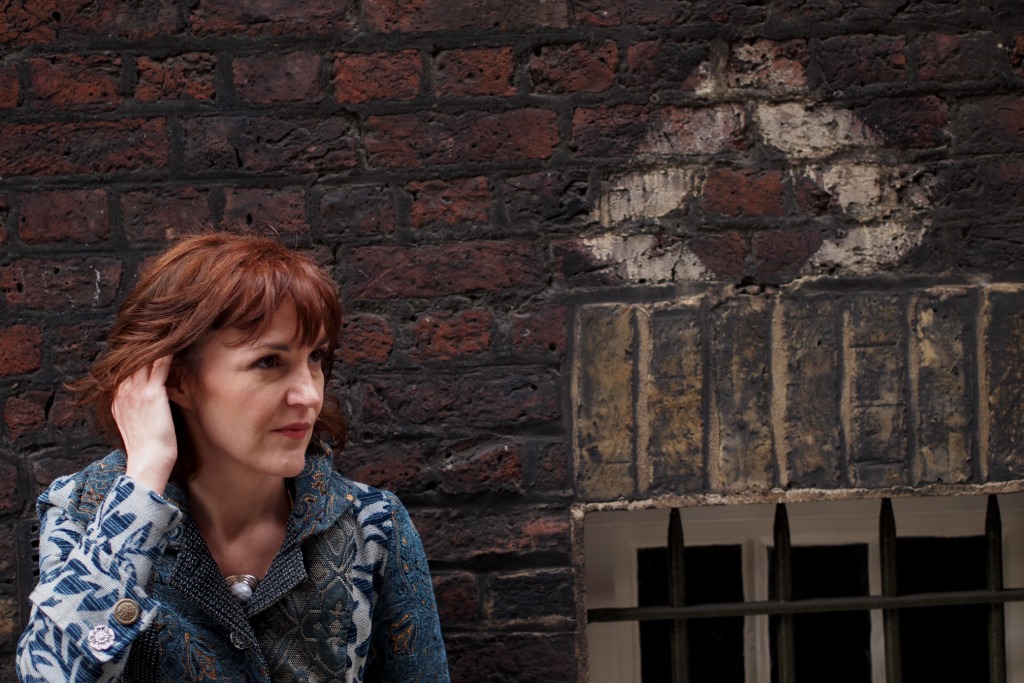
(Photo from BBC website, copyright Benjamin Ealovega)

Well, as it turned out, not quite. The evening had a name - 'Being Both' - and focused on the particular position held in opera by AC and her fellow mezzos of playing both male and female roles. (These male parts sung by women are often called 'trouser' or 'breeches' roles. I'm aware that linking voice type to role gender is a much wider and more complex exercise. For example, Mozart and Strauss both wrote male roles for soprano. Equally, some roles performed by women now were previously performed by male 'castrati' - rather putting Brando or de Niro's ideas of 'method acting' into perspective - and perhaps the male countertenor voice is a natural successor to some of these. But for the purpose of this concert, we are talking about the mezzo voice being the right fit for roles of both sexes in Handel.)

AC is sometimes referred to as 'specialising' in trouser roles, but I think that's actually misleading - what's really meant, surely, is as the concert title suggests, she's equally adept at both. She's certainly an accomplished chameleon in fully-staged productions (as the YouTube clip below shows).


But even in recitals, she challenges concert-dress stereotypes, often performing in trouser suits - and the occasional magnificent cape - supporting a kind of androgynous image in its truest sense, somehow combining elements of both genders, 'sexful' rather than sexless. Although its protaganist is male, Schubert's 'Winterreise' has (rightly) been tackled by singers of both sexes and all voices: AC's live recording at the Wigmore Hall is a modern classic because of her compelling range of emotion and sense of drama - listen to her cover the lot in the commanding dynamics of 'Die Post':


So, it's hard to imagine anyone else cutting quite so cool and understated a figure as AC does when taking the Royal Albert Hall stage. Head to toe in black shirt, jacket, trousers and flats, hair tied back, her appearance betrays no clues about what we'll hear, and in what order. Sparse props - a few blocks, a set of steps and an iPad - give nothing away, either. Then the music starts, and what we get for the next 75 minutes or so is akin to an acting/singing masterclass.

The programme departed to some extent from the tracks on the Hyperion album: 'Being Both' is very much its own thing. (I should add that it wasn't even a 'Promiere' - it made its debut in a similar part-staged presentation in Brighton earlier in the year.) Cleverly, AC has assembled the aria choices to make not exactly a 'song cycle' nor a 'suite' - but a sequence that now exists as a unified whole in its own right. It almost feels superfluous to mention how beautifully AC sang - she is so experienced in Handel and meets the demands of Baroque opera head-on with a rich and passionate tone - but it's important to state how charismatically she performed. I loved the 'live-ness' of it - moving around the stage in her various personas, she was able to 'sing at' various parts of the audience so, while I could hear her clearly at all times, her sound changed slightly depending on where she was, and what she was having to do. This made me, and most of the audience I believe, feel involved in some way and helped generate the intimacy I mentioned earlier.

The staging was extraordinarily low-key ... which again, I rather liked. (I did wonder on the way to the gig if we would actually get lots of costume changes - NOW I'M A MAN! AND NOW A WOMAN! - which didn't seem like AC's style at all but I couldn't begin to guess what she would actually do.) Instead, the minimal 'coups de theatre' paid off due to the restraint elsewhere: one block was transformed into a bath for a performance of 'He was despised' from the 'Messiah', casting a completely new light on the text and sung by AC while wet shaving! 'Myself I shall adore' from 'Semele' carried a twinge of ambivalence and regret, as AC shone torchlight on her face in the gloom, as if reading a ghost story.

As a result, I think the staging brought out the extent to which this is an 'autobiographical' show. As AC covers in the programme note, Handel had no 'problem' with gender and was primarily concerned with finding the best voice to bring humanity to the character. But for this concert - in spite of the wide range of characters represented - it's the same voice, the same person bringing to life both heroes and heroines, through singing and movement alone. With no onstage distraction, AC could communicate sensuality, singing and writhing on a block-bed, to machismo - brilliantly illustrated in an extra layer of gender-crossing through the aria 'Resign thy club' from 'Hercules', where the title character's wife Dejanira spitefully sends up his masculinity (or potential lack of it). AC has written fascinatingly about what it's like 'being both' and this recital seems to be an ideal way to bring those experiences to life in performance.

I also felt that the concert's nods to the modern era - not just the sober garb but the intriguing use of the iPad as a prop, as if to 'dial up' or trigger the next character - neatly encompassed two points. First, it admirably underlined that gender neutral/binary concepts or wider sex/sexuality/gender issues - certainly hot topics in our age - are ideas that, depending on your point of view, we have been comfortable about, or struggling with, for centuries.

Secondly, it made AC one of the band. Presenting herself far more in line with the rest of her players than as the 'star', she moved around the orchestra, shared the spotlight with a fine cellist, and finally melted into the musicians' throng to take her bows until they - justifiably - brought her forward.

75 minutes or so of sublime music would be excellent enough - but this is a brave and intriguing idea, eccentric in the very best sense, and something I could only imagine this particular artist creating and carrying off. I hope I get to see Alice Coote perform it again - and that she comes up with even more fascinating programmes that take us that little bit further into the performer's psyche.

In the meantime, you should definitely order the Handel Arias CD (or download) if you don't have it: here's a link to buy from Hyperion directly (warning - suggest you browse Hyperion's site when feeling reasonably flush!). And the audio of the Prom performance will be available here until roughly the end of September.

Post-script: I tweeted after the concert that there should be some kind of film or DVD production of it - and I stand by that. I was genuinely a bit amazed that the BBC cameras weren't in there to capture it this time. I don't want a Hollywood production number - that would be entirely against the spirit - but I think the sheer range of what AC communicates through voice and movement should be recorded for posterity. (It's not as if there's no precedent - Ian Bostridge and Julius Drake made a properly-filmed 'Winterreise' - and Warner Classics have clearly felt there's enough current interest to re-release it as part of a compilation of Bostridge's Schubert song cycles. If you're intrigued, look here.) So, how about it? Hyperion? The BBC?


Wednesday, 26 August 2015

S-pecs: Swiss report

Mrs Specs and I have just enjoyed a fortnight’s holiday in the beautiful Engadine region of Switzerland. Our base was Zuoz, a village along the railway route connecting Schuol-Tarasp (like a number of similar stops, it describes the two places it serves, run together) with St Moritz. This is the Romansch-speaking area of the country, and I couldn’t help falling for the place names which look, as well as sound, so exotic to me: Zernez, Cinous-chel-Brail, S-chanf, La Punt Chamues-ch…

We were extraordinarily lucky with the weather and, as you might expect, spent as much time as possible riding the distinctive Rhaetian Railway trains and heading up the cable car rides to the highest viewpoints (we’re not quite at ‘peak fitness’ – ha!), or actually getting the walking boots on for lower-level escapades by local woods and rivers. As is my habit, I’ll put some photos up on the blog before long to share some of these amazing views with you.

In the meantime, however, a couple of cultural highlights cropped up along the way. I suppose I should’ve been alerted to this at the outset when I saw these names on the entry-phone board of our accommodation block … and there was a rather appealing poster up in our flat, too:


However, the first event did – almost literally – take place on our doorstep. On the information board at Zuoz station, we saw that a string quartet concert was taking place the Thursday after we arrived, in one of the churches in the heart of the village, Kirche San Luzi. Rather seduced by the programme (wouldn’t you be?), we popped into the tourist office and bought tickets straightaway.

The ‘Friends of San Luzi’ appear to be the society organising the concert and not – as I thought at first glance – the name of the quartet. In fact, the players – all professionals – seem to be assembled as a group especially for the concert: the occasion seems to be semi-regular, and the biographies of all but one of them included a reference to playing the Zuoz gig in the past. Not unlike some concerts we’d attended back home at London’s Middle Temple, then, the evening was bookended by most of the audience – who clearly knew each other – exchanging warm greetings (I suspect we were the only ‘incomers’!) as well as some hearty speechifying.


An extra-special, if slightly surreal, touch was when I first noticed the cellist, Benjamin Nyffenegger, arranging his music and preparing for the concert. I leant over to Mrs Specs and whispered, “I’ve seen him somewhere before.” I could feel my face scrunch up in concentration, racking my brains: cellist, small group, must be Wigmore Hall, mustn’t it? … but mostly I go to song recitals there … then I had it. It was the same chap who played cello in the Oliver Schnyder Trio, who I’d seen accompany the tenor Daniel Behle in his piano trio arrangement of ‘Winterreise’. Far more sensibly, Mrs Specs had simply turned to BN’s biography in the programme leaflet – and there was confirmation: Behle and the Hall both mentioned in his impressive round-up. How fantastic! – that we could choose to holiday in Zuoz at this exact time, then find ourselves listening to a (superb) player I had heard in my favourite London venue.

It’s clear to see – and hear – why the residents would want to hold chamber concerts in Kirche San Luzi. It’s a very intimate space with great acoustics – slightly favouring, I think, the viola and cello, which gave a very rich, grounded sound – but the fine overall balance allowed the ear to be as fast as the eye in discerning exactly which line of notes each member of the quartet was playing.


The slow movements in particular shone throughout: I had no idea that the Haydn piece provided the tune for one of my favourite school hymns, ‘Glorious things of thee are spoken’ … adding yet another flashback to the evening. (I’m not very nostalgic about my schooldays at all in general, but this felt quite poignant, and touched me to a greater extent than I might have expected – how like music to achieve this effect.)

It was intriguing, too, to find so much Beethoven ‘brio’ present in so early a composition … and those that know me well will realise what a thrill it was to hear some rare Schubert. Violinist Sebastian Bohren explained that he had to convince the others to play the Schubert fragment but by the time they’d rehearsed the piece, they’d fallen for it as well. Hard to believe, perhaps: but in a strange way reminiscent of the famous story where none of Schubert’s friends or contemporaries saw anything at first in ‘Winterreise’, either…

We found a second artistic oasis, tucked away in a side street amid the bustle of St Moritz: the Berry Museum. Peter Robert Berry was a Swiss artist, broadly contemporary with the Impressionists, who turned to painting full-time in his thirties after starting his working life as a doctor. (His grandson founded the museum, and is the latest in several generations of Berrys practising medicine in St Moritz.)


The key influences on Berry mentioned in the museum guide are, perhaps unsurprisingly, the Impressionists themselves (he spent some time studying in Paris) and Ferdinand Hodler, another renowned Alpine artist with strongly individualistic, stylised tendencies, who encouraged him. Berry would make the mountains his main focus, and the museum is brilliantly upfront about showing those paintings where he was clearly working through these influences – there’s a captivating Impressionist-style painting of sleigh tracks leading through the snow into the distance, for example, and pointillist treatments of, say, blazing skies.

But Berry’s own distinctive style soon emerges from these influences. While showing a clear love of depicting the landscape, he also seemed determined to include an element of unflinching reportage in his work, documenting for example the mail carriers riding through the snow (and, in one macabre sketch, perishing in an avalanche). Painter by day, musician by night, there’s a lovely touch of humour in one work showing his own possessions in transit towards his mountain outpost – including his piano, the artist perched cross-legged on top of it.


The only phrase I can think of (and I fully realise it’s something of a contradiction in terms) is ‘accurate impressionism’ – harnessing some of those techniques to make his particular artistic ‘truths’ more vivid to the viewer.

However, given my love of portraiture (and Berry seemed to have a Rembrandt streak that saw him produce several paintings of himself), I was irresistibly drawn to this image of his wife, Maria.


The description of the picture drew attention to the carefree approach of the artist, reflecting Maria’s lively character and obvious ease in front of the easel. It’s a beautifully different way of demonstrating away from the landscapes how Berry could always use an apparently casual approach to find an uncanny precision.

(Berry images taken from the Berry Museum website.)

Sunday, 16 August 2015

Wigmore week

Regular readers of the Specs blog (thank you, darlings, thank you) will know by now how much I love London’s Wigmore Hall. While I always feel thrilled – and lucky – whenever I enter, say, the Royal Opera House, or the Coliseum … let alone religiously thankful when I manage to find my way into the Barbican … there is nothing quite like the feeling I get on crossing the Wigmore threshold.

For those unfamiliar, the WH is one of the finest chamber venues on the planet’s surface – he declared, scientifically – and home to recital after glorious recital of art song, and music for small choral or instrumental ensembles. It’s a gorgeous building to be in, for a start, ornate and comfortable – and blessed with crystalline acoustics. Because of its remit, it’s the perfect size to keep a sense of intimacy while still packing in a decent number of punters, and there isn’t really a ‘bad’ seat in the place (though regulars have their definite favourites). As a lieder junkie who normally sits in the gods at the opera, it’s an absolute privilege to see and hear some of my favourite performers bring all their expressive skills visibly to bear on these more fragile works, with only the piano for support, and only a few feet away.

Within those constant parameters, the WH experience is, of course, ever-changing. With a different concert every night (plus some mornings, afternoons, and lates), receiving the booking brochures is a rather more intense experience than, say, the ROH. Instead of weighing up if and when I can go to, say, four or five operas, with the Wigmore I can easily find 20 or 30 gigs of interest. It then becomes a matter of calendars, charts, maths and, occasionally, brutal decisions.

Alive, I’m sure, to how this wide-ranging programming attracts disparate audiences, the Wigmore has found a marvellously effective way to unite those who have fallen under its spell: of all things, Twitter. By maintaining a mischievous, witty – yet still thoughtful and responsive – account, it has created a follower fanbase that not only includes the capital-based die-hards that practically live in its aisles, but also semi-regular attendees from out of town, right through to passionate supporters overseas who try to ‘hit the Hall’ whenever they’re in the UK. I’ve met some fantastic people – some Twitter friends already who I can now confirm are (yes!) real people … and others for the first time on- or off-line – simply through the WH’s superb idea to hold a couple of receptions just for Twitter followers. Long may this willingness to reach out bring the Hall the reward it deserves in audience numbers.


As the WH enjoys its summer breather, it seems a good time to look back on a hectic few days I spent there recently – it might well have helped if I could’ve moved in for that week. Because, of course, you have to go on the night the person you want to see is performing (occasionally there are ‘repeat’ concerts, especially if the recital is being recorded, but these are a rare luxury) – I found myself booking four concerts there across three days. It was absolutely worth it. It was brilliant.

Gig number one was a chance to see a singer I had admired for a while: Matthew Rose. A bass with real presence, I had come across him in various guises, notably as one of the A-team of ‘Missa solemnis’ soloists under John Eliot Gardiner, and as Talbot in ‘Maria Stuarda’ at the ROH. Accompanied by Helen Collyer at the piano, he had put together a fascinating recital of Purcell/Britten arrangements, Brahms lieder – an ideal vehicle for so powerful a voice – and, perhaps most arrestingly of all, some epic and arguably unhinged songs by Loewe (…”Oh!”). These at-times manic episodes allowed MR to demonstrate that speed and agility belong as much to the lower register as anywhere further up the scale. And special mention must go to HC’s superb accompaniment, which married lightness-of-touch with the necessarily robust playing to meet MR’s sound on equal terms. (I was really pleased to see that this performance was being recorded for a live CD on the WH label. I’ll be buying it, and encouraging all of you to do so, too – this was a great programme and deserves the wider audience it’ll receive.)


(MR photo copyright Lena Kern)

The following night was a solo recital by the pianist Marc-Andre Hamelin. While Hamelin’s reputation as a technical genius certainly contributed to my wanting to be there, I find on CD that the precision of his playing is just part of the story and that there’s a kind of joyous thoughtfulness also in evidence. His ‘encore’ discs alone belie a questing interest in bringing less known composers to light, along with a very upfront desire to entertain. (Add to that he’s a composer of some note, too.) So I went along expecting to be dazzled – and hoping to be moved. Both applied. From the hypnotic resonance of a Schubert sonata to a Chopin funeral march of defiant, uncompromising power, he held us transfixed. A towering talent.

For all these delights, the chances are that evening number three might take its place as one of my most cherished musical memories of all. A Friday night, it featured two concerts, one at 7pm and another ‘Wigmore Late’ event at 10pm. Initially, it was the 10pm gig that caught my eye, because Trio Mediaeval were performing – an act very close to Mrs Specs’s and my hearts after catching them (also at the WH) several years back. Based in Norway, their London visits seem all too rare.

Then I realised what a treat it would be to essentially set up camp there for the evening and go to the 7pm too. I was delighted to see that it was a recital by a mezzo I had wanted to hear for a long time, Angelika Kirchschlager, accompanied by Malcolm Martineau. The little I had managed to hear of AK, I had liked very much; whereas I love MM’s piano style almost beyond reason. So – this was going to be good.

If I had to pick one word to describe this recital, it would probably be ‘warm’. It was simply a pleasure to be in this duo’s company. Obviously, some singers prefer to create an atmosphere and rarely bridge the artist/audience divide (think of someone like Ian Bostridge performing Schubert – inhabiting a certain persona can be essential), while others bring more of their ‘off-stage’ personality into the proceedings and in so doing, ‘include’ us a little more. This is what AK and MM chose to do. The programme was rich in beauty and – for art song – contained room for humour as well as drama: Brahms, Wolf and Schumann lieder, followed by some typically gorgeous Hahn melodies.


(AK photo from Askonas Holt website - could not see photo credit)

AK was smiling throughout, not – as so often with song recitals – supporting herself on the piano, but a lithe, forthright presence, making only natural those moments where the ‘big’ mezzo power was unleashed. MM – whose playing is so fluent and expressive – also allowed himself to move occasionally into character, making eye contact with the audience after executing several perfect outros. (And what more perfect pianist for Hahn than Martineau? – listen to his liquid Debussy or Poulenc accompaniments: he really is the ‘melodie’ man.) The rapport between them was so strong – there seemed to be so much shared between as well as during the songs – that I can only hope for more recitals, or even a disc – and soon, please!

Trio Mediaeval (Anna Maria Friman, Linn Andrea Fuglseth & Berit Opheim) rounded off the evening with their own brand of perfection. Each of the women has an extraordinary voice, and the kind of vocal dexterity that allows two of them to sound like three, and the three of them a choir. Their range is so wide and the tones so pure that you have no choice but to surrender and let the sound surround you. For some of the songs, this literally happens, as one of them goes on patrol behind the audience to form a triangle – we get to be in the midst of the music, transported without moving.

The Trio’s repertoire has often been a mix of early and contemporary choral, and the new album ‘Aquilonis’ (which they were performing here) is no exception. Some lovely modern pieces – in particular by Andrew Smith – feature and hold their own against, say, a selection of English carols from the 1400s. But for me, the greatest discovery by far – and the most gorgeously strange, as the Trio harmonised above their alien-sounding melody chimes (like single hand-held glockenspiel keys with beaters attached) – was the ‘St Thorlak’ collection of 14th century Icelandic hymns. I think there were moments during these pieces – scattered through the recital as if to hear them all together might close-pack too much beauty – when the audience held its breath, as if we somehow couldn’t be silent enough.

I hope writing this hasn’t increased the severity of the withdrawal symptoms. (Time to close the laptop. Drum fingers on the table. Wait for the Wigmore to re-open…)

Peal sessions: Trembling Bells

I’m convinced that Trembling Bells are one of the best bands currently active, and possibly of all time. This post aims to convince you too.

Recently, the group released their latest album, ‘The Sovereign Self’. Many right-thinking people, I’m sure, would describe this record as ‘long-awaited’. Trembling Bells began in a burst of prolific activity – three majestic albums in as many years. The fact that one of their finest songs (‘Goathland’) appeared early in the band’s life on a sampler CD but only made its official, more polished bow on the third record suggests that tunes may have been pouring out of the band’s chief songwriter – and drummer/vocalist – Alex Nielsen, even as he was nailing down the sound he wanted to achieve.


And the sound is… Well. On the surface, you might call it folk-rock. Or, to borrow a more recent term, you might hear ‘psyche-folk’ in it. It’s all of that and more besides. It mixes not only genres, but ideas, personalities. While the folk influence may well be the over-riding feature – or perhaps just the most convenient tag – everything about how the band operates unglues any idea of a ‘trad’ approach, instead focusing firmly on the present and future.

One reason for this is the key personalities involved. To start with Alex N – he is upfront about how certain folk luminaries – Shirley Collins, Martin Carthy – helped him to form his musical character. But in essence, I feel AN is a jazz drummer – a quality that already sets the Bells apart. Somehow making me think of both Billy Higgins and Paul Motian – among others – at the same time, he can keep a rocking beat with the best of them, but seems to use the kit as much for colour and embellishment, helping the song along like you might a hoop with a drumstick. His playing never settles – it’s always doing more, finding new ways to support the song without over-dominating.

(Meshing genres in this way – not to create a bolted-together fusion but more to alter the ‘fabric’ of the overall sound – is, to me, a sign of forward-thinking creativity. It seems quite suited to freestyle drumming – listen to how Brann Dailor lifts the sound of the metal band Mastodon – or, to give another example, there’s also the sadly short-lived way Portico Quartet constructed a kind of alien ethereal jazz by making an instrument called the hang a fundamental feature of their music.)

AN’s lyrics also pull the Bells away from folk cliché, often fixed in the personal realm and with a very current sense of time and place: "Killing time in Clerkenwell"; "When Lou Reed and Lauren Bacall / Defeated Asterix the Gaul"; "Tilt towards the A61"...

Main vocalist and keyboard player, Lavinia Blackwall, has a truly exceptional voice, and the perfect voice for the band. Able to scale angelic heights, she can then assume a more earthbound/earthy tone at no notice, simultaneously breaking hearts, lifting spirits and loosening collars: you can hear this effect in the chorus of ‘Goathland’ – try around 2:30 to 2:40.

With this much going on, it’s perhaps easy to see why Trembling Bells have too many ideas for one band. AN and LB have previous form in an improvising duo called Directing Hand, and AN unleashes the fury in a free jazz trio called Death Shanties – possibly unique in that, alongside drums and saxophone, one member creates abstract art spontaneously while they play – matching a moment of visual creation to the instantly-composed music. AN and LB also both sing, alongside Katy Cooper and Harry Campbell of traditional troupe Muldoon’s Picnic, in a mostly unaccompanied quartet called Crying Lion.

(Digression: I adore Crying Lion, and I urge you to get their LP, ‘The Golden Boat’ – somehow more mystery-soaked than the main band, the mix of voices, which blend and yet remain four distinct characters, creates shiver-down-the-spine stuff. Singing stereotypes are not followed: the ‘softer’ voices are Katy C and Alex N – who often openly downplays his singing ability, but in fact has a fragile timbre but solid technique, a tender line cosseted by the others; Lavinia B provides some of the grit to match Harry C’s lower register. In its own, quietly forceful way, Crying Lion’s ancient acoustic is confrontational, challenging and rewarding. Recommended.)

They also have a knack of working with their heroes and influences. The band have an ongoing live partnership with Incredible String Band veteran Mike Heron, and they collaborated across an entire – superb – album called ‘The Marble Downs’ with Bonnie Prince Billy. So, rather than writer’s block or some other kind of creative freeze, in the four years since previous Bells album ‘The Constant Pageant’ it’s a wonder they’ve found time to make ‘The Sovereign Self’ at all. Let alone make it a masterpiece.

With eight fairly lengthy tracks, one of the most pleasing aspects of the new record is how the sound seems fit to burst, pushing against its constraints – as if the Bells had found a way to reflect or symbolise their broiling stew of elements in audio form. In the past, say, the debut album ‘Carbeth’ stretched out in new-born eccentricity (I still believe that its first track, ‘I Listed All The Velvet Lessons’, is one of the great opening statements by any band), while the next two records arguably saw them hone this tendency into a sharper attack.


With ‘The Sovereign Self’, they somehow find the meeting point between all that has gone before – the epics return, but with multiple strands and sections – and a kind of fearless, complex all-out rock that sees them take a flying leap forward.

Close listening reaps all kinds of rewards. For example, one of my favourite tracks, ‘O, Where Is Saint George?’, starts with the chorus chanted above a free-form swell of sound, before the country-rock shuffle of the verses kicks in. But then, when the chorus returns, a ritualistic rhythm pounds beneath it … and finally, the third time, they somehow attach the verses’ loping beat to the chorus, binding the whole shebang together.


Possibly the most thrilling signature touch in the whole album for me comes right near the end, in the rollicking closer ‘I Is Someone Else’. The song rattles along at a terrific clip, with Lavinia B’s vocal line gradually rising a couple of times in each verse until she arrives at one of those ‘release’ notes – that is, the exact pitch you’ve somehow been wanting her to reach. Just before that point, Alex N’s drumming switches for no more than a bar or so to half-speed. The effect is of the band standing back in appreciation of the voice – a split-second inner “Woah!” – before the top note triggers them into picking the pace back up in an instant. A seemingly casual detail that makes the song so much more powerful.


It’s tempting to describe all of the other six tracks as fellow highlights. I could mention ‘The Singing Blood’, which has a sort of halting resolve that puts me in mind of the first Palace Brothers album (what greater compliment?). There’s ‘Killing Time in London Fields’, which uses organ and guitar first to match riffs, then dovetail two hooks within each other, and on top of all that, literally stop the clocks mid-verse. I’ll let you discover the other half of the album for yourself.

Luckily for me, the band’s latest tour included three London dates. First up was a two-night residency at Café Oto to celebrate the album launch. Some superb guests were lined up across the two evenings, which only goes to show how much the respect Trembling Bells pay towards other artist-influences is returned. Particular high points for me were hearing Alasdair Roberts play a beautiful set on night one, then the following evening to see Martin Carthy – yes, I know – ten feet away in the same spot, holding the audience spellbound.

But the main event – both at the residency and the follow-up gig in 229 The Venue a few weeks later – are unquestionably the Bells themselves. Always playing ‘forward’ – in the set proper, we get just one ‘oldie’, most of the new record and an even younger, spectacular track called ‘The Wide Majestic Aire’ – they harness, replicate then ramp up the controlled chaos into a riotous swirl.


If you like thrilling, thinking music, Trembling Bells are absolutely made for you. Catch them live, then give into that irresistible impulse to buy the album at the merch stand. It’ll be a hardy companion.

PS! While I realise you might need a full-time manservant to keep up with all the band’s activities on your behalf, one extra-curricular release you shouldn’t miss is the special single made for this year’s Record Store Day. The 7” physical copies are still around here and there, but limited – however, both songs are available on download. ‘Hallelujah’ – not that one – is a brilliant and concise hybrid of folk mantra and pop song (ace as it is, you can see why it might not have felt like a natural fit for the album), while the flipside is a soaring cover of George Harrison’s ‘Wah Wah’. Any argument needed for keeping the single alive? – Here it is.


Friday, 31 July 2015

Pushing the Boundary

Following on from the last one more swiftly than usual, here's another photo post. Earlier this month, I shared some portraits I'd taken of my friend Suzanne. Those pictures were the first fruits of a new project I've started, where most of my 'photo army' - who already gamely give their time and energy to collaborate on these sessions - are going to appear 'in character'.... many for the first time.

It's still early days and the overall scheme of the thing is still coalescing... so forgive my being a bit coy about the whole concept for the time being. But I'm thrilled to be able to share these pictures from a recent evening shoot with a portrait veteran, Ellie. Those of you who have seen photos of Ellie before on the blog will know what an irrepressible, energetic presence she is. The requirement this time (and I think the twilight atmosphere and quiet Boundary Gardens location helped) was to dial that down slightly and a more muted, even moody subject emerges. Thanks to Ellie for succeeding brilliantly and creating a persona slightly removed from her normal 'zone'. I hope you enjoy the photographs.


Tuesday, 14 July 2015

Stage fright: phantoms at the opera (possibly going 'Boo!')

I was struck by how two of the operas I've seen most recently both set out to disturb or frighten me. One of these - especially if you're a fellow UK dweller - you may well have heard about already: a confrontational, violent scene in the Royal Opera's latest production of 'Guillaume Tell' (that is, Rossini's 'William Tell' - yes, the chap who shoots the arrow, yes, that overture).

For anyone who missed the brouhaha, this latest version (directed by Damiano Michieletto) stages the Tell-tale of the downtrodden Swiss rising up against their Austrian oppressors to a modern Balkans-like conflict. Rossini's final work, a grand parting gesture, the opera is a lengthy, serious business. I imagine anyone turning up to any production because they like the 'rum-diddly-um' of the overture - and don't get me wrong, that's as good a reason as any to give it a whirl - might be taken aback at the darkness of the subject matter.

The scene that caused such controversy dramatised a group of Austrian officers menacing, taunting - and ultimately stripping and preparing to gang-rape a captive Swiss woman until Tell intervenes to save her. It's an unashamedly uncomfortable sequence: throughout the evening the production seems consistently aware of the tension generated between Rossini's irrepressibly stirring music and the downbeat action - and this particular scene unfolds over the five or so agonising minutes of the 'ballet' sequence.


But to give some context: I have my doubts that the scene was, as some detractors called it, 'gratuitous'. ("Heads should roll" opined one commentator on Twitter, showing a clear distaste for unnecessary violence.) Early on in the action - and this is in the libretto - Tell helps a fellow countryman, on the run after killing an Austrian officer for raping his daughter. The murder of Melchtal, brought onstage at the end of the first Act, signals clearly enough that this is going to be a descent into hell. Soldiers are seen teaching little kids how to use automatic weapons. So, when the officers (as the libretto has it) 'force the women to dance' with them, it's not hard to see what lies beneath that euphemism.

But what lifted the shock value into the stratosphere was the audience reaction: on opening night, the scene was boo-ed immediately - in other words, mid-performance, while the music and singing were ongoing. Boo-ing at the opera is apparently still a vexed issue (although I'm fairly clear where I stand), but what possibly prompted a Royal Opera House audience to erupt like this? Even since I've been going regularly, punters have been quite happy to watch Wozzeck cut poor Marie's throat onstage then drown himself in a blood-filled tank; see healthy lashings of gore splatter the house of Atreus in 'Elektra', and let a decadent orgy play itself out in the current production of 'Rigoletto'.

Whatever your reaction to the scene might've been (the night I went, there were a few cowardly boos, quickly silenced by some applause), I don't think there can be any question of suddenly deciding opera cannot shock or challenge; nor should we censor the work. Instead, I would argue for classification along the same lines as film. It seems to me that audiences are content to see most things, as long as they see them coming. (They'll watch something shocking, as long as it doesn't come as a shock..!)

Here, the ROH made a mistake - they warned along the lines of 'adult theme'/'nudity', when as cinema-goers will know, if rape is involved, you need to at least flag 'sexual violence', which is how the ROH (rightly exemplifying the 'apologise, then move on' approach) now have it. It's not just a case of keeping such things away from the little ones; in these (hopefully) psychologically enlightened times, there are good reasons to warn everyone. Accordingly, the cinema relay of 'Tell' carried an appropriate certificate and seemed to generate more or less zero hostility.

As powerful and important as that scene was, it was a shame that the overwhelming focus on it drew the attention away from other superb aspects of the production. The score is exciting, moving and by the end transcendent, and as the orchestra soared, so did the chorus, on majestic form. Gerald Finley, always so convincing when marrying his warm baritone to appealing, endearing characters, sang beautifully in a kind of 'reluctant superhero' mode - succumbing to despair, then finding the extra energy and strength of will needed to stir up his compatriots. (Not to mention his casual bullseye when father gives son an onstage archery lesson.)

A further interesting conceit was the blurring of timelines. As if there was a break in the continuum, the Tells - and Guillaume in particular - are shadowed by a silent Tell figure from the actual period, who enables their modern-day feats to succeed. The fact that this works make it easier for the director to make a point about weaponry and the technology of warfare - having his cake and eating it, he shows us the Swiss children losing interest in their toy swords once the 'friendly' soldiers show them guns, then Tell performing the famous apple trick with a relatively old-fashioned crossbow.

Rewind a month or so, and down the road at the Coliseum, English National Opera were staging Tchaikovsy's 'The Queen of Spades' (or 'Pique Dame'). A gripping chiller based on a Pushkin short story, it's not the most obscure opera in the world... but I think it's under the radar just enough to make me shy away from giving the full story. (This has happened a few times now. I've turned up to an opera - not necessarily brand new, but unfamiliar to me - without going anywhere near a synopsis beforehand. Not knowing exactly what will happen - as if going to see a film, say - is actually quite unusual, since most serial opera-goers, even after only a few years, are much of the time seeing new or revived productions of 'repertoire'. Boheme or Traviata can rip your heart in two, but it's a different experience from encountering genuine suspense.)

Suffice to say, then, that the story concerns an enigmatic officer, Herman, who hangs out with a clique of gambling mates but never plays himself. He blames his distraction on being in love with Liza, the grand-daughter of a Countess. She is out of reach, already engaged to a Prince. Through the friends' conversation, we learn about the Countess's past - as a young woman, she used her ample charms to secure a secret gambling formula and conquer the card tables, earning her the 'Queen of Spades' nickname. The story then acquires its supernatural sheen as we hear about a curse of sorts - the Countess only ever shared the formula with her husband and lover, before a ghost warned her against a third man who would come after her for the secret. Herman's fragile state of mind starts to crumble as his determination to get the formula through Liza unbalances his feelings for her - indeed, were they ever there in the first place? - and his growing obsession only leads to further disaster. There is a killer twist at the end - not exactly 'unguessable', but more like a sudden realisation that you know a certain event will happen, accompanied by the pleasurable agony of waiting for it to arrive.

I had a fantastic time. I felt the chorus, as ever at ENO, were unstoppably powerful, and the partnership between orchestra and conductor Edward Gardner yet again produced this warm, all-enveloping sound that, for all the brilliance and beauty of the score, could equally turn menacing and oppressive as the action intensified. (It's a shame to see Gardner leave his post as ENO music director, but he's still coming back to conduct - next for a 2016 'Tristan and Isolde'.) It was thrilling to hear the venerable Felicity Palmer sing the Countess with such stately power. And I want to reserve special praise for one of my favourite tenors, Peter Hoare, who took the role of Herman. Back when I first heard him as Creon in 'Thebans', it seemed to me that PH possessed a particularly 'dark' tenor voice - not that of a noble hero but scheming villain. Instead of a 'wide', alluring tone, he aims his notes like lasers (a kind of narrow style, a bit like I've heard Ian Bostridge deploy in recital). In supporting roles at the ROH, he's often been a slightly dodgy, or obsequious character (giving great value in 'Mahagonny' and 'Falstaff' in particular) but at ENO he's been able to stretch out into these masterful anti-hero portrayals. I never tire of seeing and hearing him.

The production seemed to divide opinion, with some people finding it seedy and/or senseless. Certainly, some of the Persistently Offended made their thoughts known on Twitter. It's also worth pointing out that a female character is menaced by a military gang and one character cuts their own throat onstage - but there was certainly no outcry in the house, or calls for operatic scalps in the press. Why not?

Well - I felt the production worked for a number of reasons. Opera is of course innately 'unrealistic' but the plot of 'Queen of Spades' itself is surreal - and accordingly, the staging gave us a slightly sickly yellow-dominated backdrop, punctuated by a clock face, or gaps and windows.... and at one point, a key character is projected, becoming literally larger than life. In other words, it seemed deliberately cinematic. One violent scene was framed in a window as if we were viewing it on a screen, bringing to mind that film trope of distancing viewers from what they see while implicating them at the same time. We see a classic dream sequence. The lift doors and protractor-shaped floor indicator that call to mind 'The Shining' (and its famous yellow poster). Even the woozy colour scheme, somehow suggesting Herman's mental fever and decay, felt like a nod to Hitchcock's 'Vertigo' with its garish hues underlining James Stewart's sick compulsion.


(Peter Hoare and Felicity Palmer. Photograph from ENO website, copyright Donald Cooper.)

And people aren't nearly so hung up about sex and violence in the cinema. It almost feels like the more 'Queen of Spades' felt like a movie, the further it could go.

Also worth considering is the apparent distinction that ENO is seen as the home of experimentation and extremity, while the ROH is keeper of tradition. I don't quite feel this way myself - it sort of relies on you only counting ROH main stage productions when plenty of challenging work is staged in its studio theatre, the Linbury. And among its major modern productions, the ROH can boast the transcendent 'Written on Skin', extraordinarily frank 'Anna Nicole' and the tech-driven update of 'Mahagonny'. (And ENO has its 'Mikados', too.) But the 'character' of each institution seems to stick, and it's possible that a higher proportion of the ENO audience are more sanguine about on-stage trauma than their ROH counterparts.

One feeling I'd like to shake - but just can't - is that we are going though a period when it is somehow cool to knock the ROH. ENO has been through a really traumatic time and is still in the throes of huge changes - in that light, they are doing absolutely amazing work, and even as a major house, they've acquired a kind of 'plucky underdog' status, worthy of as much support that we can all give them.

In comparison, there seems to be an unsavoury undercurrent of taking the ROH - and in particular, opera director Kasper Holten - down a peg or two for not suffering the same setbacks. Only today, I read a piece specifically singling out Holten's and music director Antonio Pappano's salaries for attention. It's not my place to say whether the figures are too high or not, but the writer homed in on Holten for not yet justifying his pay with his productions so far ... making, to my mind, the fatal mistake of assuming that money - which is tangible, fixed, pre-arranged - can somehow be linked to artistic endeavour - which is elusive, unquantifiable and subjective. Personally, I really like Holten's work - I've found his productions arresting and innovative - but his 'worth' to the business will surely be measured eventually in terms of raising the ROH's profile and getting bums on seats: numbers based on numbers. Instead, this journalist allowed his own opinion of Holten's talent to weaken his piece. In the end - he's just knocking the guy. Boo-ing, but in print format.

If we're not careful, we'll lose sight of what I imagine is slightly buried in my post by now: that both of London's most prominent opera houses are equally capable of producing challenging, confrontational work on a bedrock of superb performances. It's time we replaced the boos with cheers.


Thursday, 9 July 2015

Suzanne holds the mirror

When I posted some of my photography back in February, I mentioned that next I might start on some kind of larger-scale project - mainly because I'd had 'An Idea' and it was starting to coalesce properly in my mind. Now, with some relief but also a few nerves, I've made a start.

I don't actually want to say too much about the project itself - at least, not for a while. The main reason is not to be mysterious, I assure you - it's more that this is the most collaborative single thing I've attempted, and the final result will be the effort of around, say, eight or nine people - not just me. While I'll still be doing the kind of pictures I love most - portraits - there's an over-arching scheme at the back of my mind, and my photo army (for whom I'm eternally grateful) are for once not necessarily being quite themselves. (Or even more themselves? Who knows?)

I know Suzanne - like so many other good people - through the community that built up around the website of the sadly-missed Word magazine and spilled out rather successfully into the off-line world. (So it's appropriate to give the title of this post a musical connection - thank you, L. Cohen.)

Suzanne was - and is - a fantastic subject. She immediately grasped what I was after, totally nailed the look and (as I know everyone involved will do) added a great deal of her own style and attitude into the mix. And on the day itself, she conjured up seemingly unlimited enthusiasm (let alone outfits!)... Thank you, Suzanne.

Plan A, as always, is to make photographs that the model is happy with, and I'm pleased to say that worked out fine. The pictures you see here, then, I think represent a successful portrait session - but also the start of a story. I hope you enjoy them.